
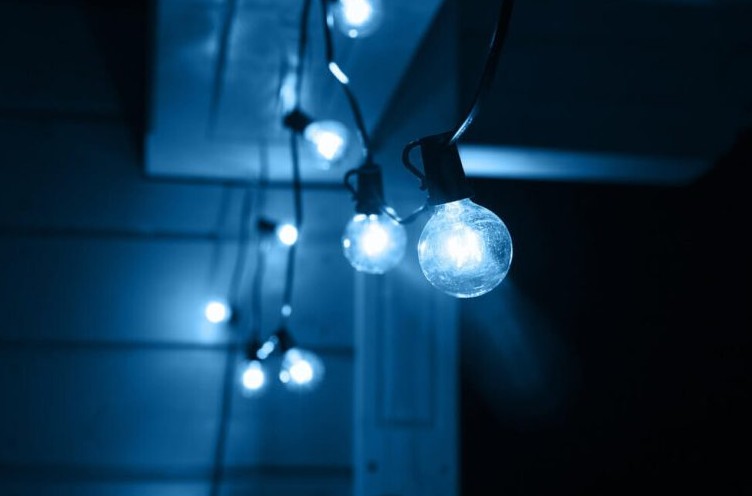
The Blue Glow: Understanding the Deep Meaning Behind Blue Porch Lights
As winter approaches and the holidays draw closer, neighborhoods begin to glow with familiar sights—soft white lights, festive reds, and evergreen hues that signal warmth and celebration. Yet among these traditional colors, another shade often catches the eye: blue. A blue porch light, whether bright or understated, stands apart from typical holiday décor and quietly invites reflection.
For some, it’s a simple design choice. For others, it carries a message that runs deeper than decoration. In recent years, blue porch lights have appeared more frequently across communities, especially during the colder months. Once associated with only a handful of meanings, the color has gradually taken on broader significance, turning a simple front-porch fixture into a beacon of social and personal symbolism.
A Beacon of Support: Honoring Law Enforcement
One of the most widely recognized reasons for a blue porch light is “Project Blue Light.” This initiative began in the late 1980s and has since become a nationwide symbol of support for law enforcement. The movement started when a woman named Dolly Craig placed two blue candles in her window to honor her late son-in-law, an officer killed in the line of duty.
Today, that single act has evolved into a community-wide gesture. By replacing a standard white bulb with a blue one, homeowners send a clear message of gratitude to those who work in law enforcement and emergency services. During the holiday season, when many first responders are away from their own families to keep the public safe, the blue light serves as a silent “thank you.” It represents a wish for their safety and a tribute to those who have made the ultimate sacrifice.
Shining a Light on Autism Awareness
Beyond its connection to public service, the color blue is the primary symbol for autism awareness and acceptance. The “Light It Up Blue” campaign, often associated with World Autism Awareness Day, encourages people to use blue lighting to foster a world of inclusion.
However, many families choose to keep the blue glow year-round or specifically during the winter months. For these households, the light is a sign of solidarity with the neurodivergent community. It signals a home that values understanding and acceptance. In a season that can often be overwhelming—with its loud noises, bright flashing lights, and social pressures—the steady, calm blue light is a reminder of the need for sensory-friendly environments and the celebration of different ways of experiencing the world.
A Tribute to Healthcare and Essential Workers
In the wake of the global health challenges of recent years, the blue porch light took on yet another layer of meaning. Blue became the color of “Healthcare Heroes.” From nurses and doctors to laboratory technicians and hospital staff, the color represents the tireless dedication of the medical community.
During the holidays, the blue light serves as a poignant reminder of the healthcare workers who spend their nights in hospitals rather than at home under the Christmas tree. It is a symbol of healing and resilience, acknowledging the professionals who provide care and comfort during our most vulnerable moments.
Personal Remembrance and the “Blue Christmas”
For many families, the meaning of a blue light isn’t tied to a public movement but to a private memory. The holiday season, while joyful for many, can be a difficult time for those who have lost a loved one. The “Blue Christmas” sentiment refers to the quiet grief that can accompany the festivities.
A blue porch light may be a quiet tribute to a family member who is no longer present to share the holiday meal. It is a way of saying, “You are still remembered.” Blue is often associated with peace, tranquility, and the infinite nature of the sky and sea. For a grieving family, the color can provide a sense of calm and protection, acting as a small, glowing memorial that bridges the gap between the past and the present.
Peace, Protection, and Aesthetic Calm
Sometimes, the choice of a blue light is rooted in the psychology of color. Blue is scientifically proven to have a calming effect on the human mind, lowering heart rates and reducing feelings of anxiety. In the midst of the holiday “hustle and bustle”—a time often defined by stress and sensory overload—a blue porch light can be a sanctuary of stillness.
In some cultures and traditions, blue is also seen as a color of protection. It is believed to ward off negativity and bring harmony to the household. By choosing blue, a homeowner might be intentionally setting a tone of serenity for all who cross their threshold. Furthermore, from a purely aesthetic standpoint, blue lights complement the icy, crystalline beauty of a winter landscape, providing a sophisticated alternative to the more saturated primary colors of traditional décor.
The Power of Intentional Acts
There is no single message carried by a blue porch light—its meaning comes from the intention behind it. These lights demonstrate how a small, everyday detail can convey a profound message. Whether it is a show of unity, a mark of respect, a sign of awareness, or a deeply personal act of remembrance, the blue glow invites us to look closer and think deeper.
As you walk or drive through your neighborhood this season, take a moment to notice these blue lights. They serve as a reminder that behind every front door is a story, a value, or a memory. In the darkness of winter, these intentional acts of lighting remind us that we are connected by more than just proximity; we are connected by our shared gratitude, our respect for service, and our enduring love for those we have lost.