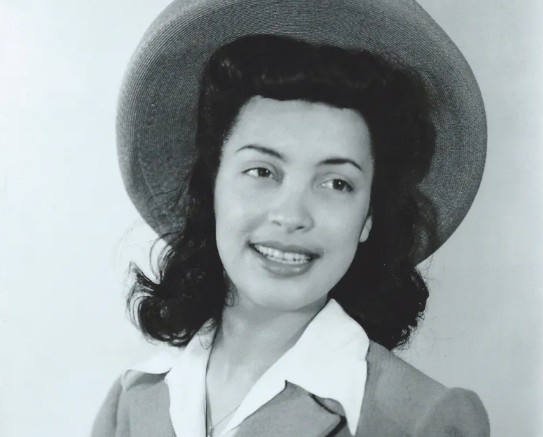
She lived through eras most of us know only from history books.
Wars, segregation, silent victories, loud injustices — all of it passed before her eyes.
She didn’t simply witness history. She carried it, protected it, and refused to let it be forgotten.
For decades, her work unfolded quietly, without headlines or applause.
Visitors listened, learned, and walked away changed — often without realizing they had just met someone extraordinary.
Her voice restored stories that had been erased, especially those of people history chose to ignore.
Even in her later years, when most would rest, she kept showing up.
She believed memory was a responsibility.
And she treated truth as something sacred — worth defending at any age.
Only now do we say her name.
Her name was Betty Reid Soskin.

She passed away peacefully at the age of 104, leaving behind a legacy that stretches across more than a century of American history. Until her retirement at 100, she was the oldest active ranger in the National Park Service — a symbol of resilience, clarity, and moral courage.
Long before wearing a ranger’s uniform, she was a civil rights activist, a historian, a storyteller, and a fighter for inclusion. She helped shape the vision of the Rosie the Riveter/World War II Home Front National Historical Park, ensuring that the contributions of African Americans and other marginalized communities were finally told — honestly and fully.
Her life began in 1921 and carried her through the Jim Crow South, World War II, political upheaval, and cultural transformation. She worked in segregated unions, co-founded one of the first Black-owned record stores in the U.S., served in government, and advised generations with wisdom earned through lived experience.
Even in her final years, she followed politics closely, worried about the future, and spoke openly about her fears for the world she would leave behind.
Now she is gone.
But the stories she rescued remain.
And because of her, history will never be quite as silent again.
A public memorial will be announced later.
Her family asks that, instead of flowers, people support education and the completion of her documentary — a final act of preserving truth, just as she did all her life.