

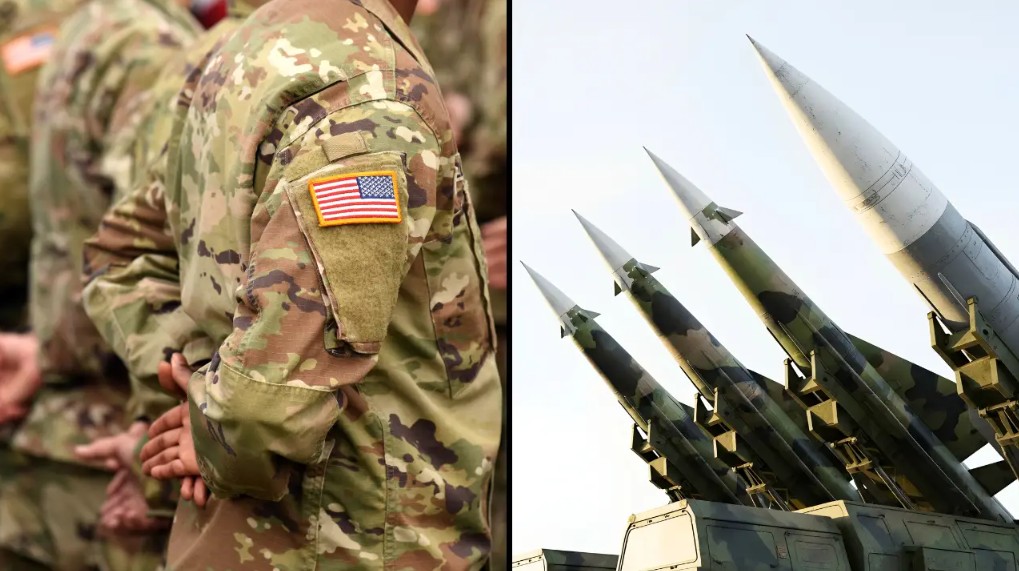
World War 3 fears
The conflict in Ukraine has entered its fourth year, evolving into what many observers now consider the most serious standoff between Russia and the West since the Cold War era.
At the same time, relations between Washington and Beijing remain strained, particularly over Taiwan, while instability across the Middle East continues, with long-running conflicts showing little momentum toward resolution.
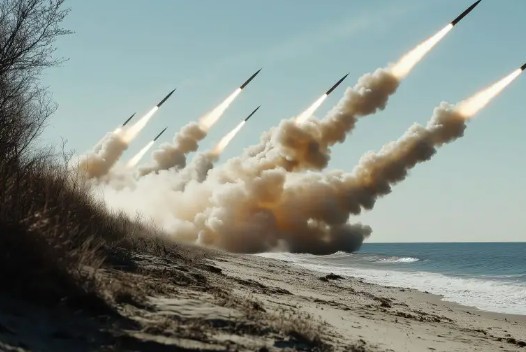
Heightening these concerns are growing nuclear risks. Russia has conducted tests of next-generation weapons, and longstanding arms control agreements are weakening or collapsing altogether.
Beyond traditional military threats, cyber operations targeting critical infrastructure are becoming more frequent, and the rapid development of artificial intelligence and autonomous weapons is reshaping how wars are fought.
In the United States, Congress has approved automatic enrollment in the Selective Service starting in late 2026, representing the most significant revision to draft-related policy in more than four decades.
Public unease has risen sharply. Fears of a third world war are now at levels not seen in generations.
A recent YouGov poll indicates that between 41 and 55 percent of Western Europeans believe a global conflict could occur within the next decade, while 45 percent of Americans share that view. Notably, roughly two-thirds to three-quarters of respondents expect such a war would include the use of nuclear weapons.
While no one hopes for such a conflict, understanding the Selective Service System (SSS) and its potential exemptions can provide clarity in uncertain times.
How likely is Word War 3?
Security experts have delivered cautious yet unsettling evaluations of the risk of large-scale conflict, according to reporting by Sky News.
Philip Zelikow, a historian and former US diplomat, has estimated a 20–30 percent chance of what he describes as ‘global warfare.’
Writing in Texas National Security Review, he warned that the coming one to three years may represent a period of heightened strategic danger.
Similarly, the Council on Foreign Relations’ 2026 Preventive Priorities Survey highlighted a number of scenarios judged to be both highly likely and potentially severe in their impact on US national interests.
The report underscores that the threat of confrontation between major powers has not disappeared.
It identifies flashpoints such as a crisis in the Taiwan Strait and possible clashes between Russia and NATO as events with a meaningful probability of occurring.
Despite these assessments, specialists repeatedly emphasize that reinstating a military draft would be considered only under the most extreme circumstances.
The United States fields one of the largest professional, volunteer-based armed forces in the world, and contemporary warfare increasingly depends on advanced technology and precision capabilities rather than sheer troop numbers.
As a result, maintaining draft infrastructure is widely viewed as a precautionary measure and a strategic deterrent, not an indication that compulsory service is expected in the near future.
What is a military draft?
The SSS has a long history of conscripting U.S. soldiers, notably during the Vietnam War, when 1.9 million individuals were called to serve between 1954 and 1975, per the Mirror.
Currently, all male U.S. citizens, including undocumented immigrants, refugees, and green card holders, are required to register for the draft between the ages of 18 and 25.
Failure to comply can result in a significant fine of up to $250,000. These registered males form a primary pool, with conscription typically starting with 20-year-olds and then expanding to other age groups.
Citizens most likely to be drafted
Under current Selective Service rules, the individuals most likely to be called up in a draft would be male U.S. citizens and male immigrants between the ages of 18 and 25 who are registered with the Selective Service System (SSS).
According to the SSS lottery process, men turning 20 during the lottery year are selected first. If additional personnel are needed, the draft would then expand sequentially to ages 21 through 25.
Only after exhausting that pool would 19-year-olds, followed by those aged 18.5, be considered.
Registration is mandatory for all eligible men within 30 days of turning 18, regardless of immigration status.
Failure to register is a federal felony punishable by fines of up to $250,000 and up to five years in prison. Beginning in late 2026, registration will shift to automatic enrollment using federal databases.
Importantly, registration does not equal immediate induction.
Every potential draftee would undergo a comprehensive medical, psychological, and eligibility review, and many would receive deferments or exemptions.
The lottery system is designed to ensure randomness within each age group rather than blanket selection.
Who would be safe from the World War 3 draft?
Several categories of people would be exempt from conscription altogether or unlikely to serve in front-line combat, based on current regulations and historical precedent, per UNILAD Tech.
Women are presently exempt, as the draft remains limited to males. While discussions about expanding registration to include women have occurred, no legislation has been passed to require it.
Individuals with medical or mental health conditions, including chronic illnesses, disabilities, or serious psychological issues, would likely be deferred or fully exempt.
As the Selective Service System states, anyone deemed ‘medically or psychologically unfit’ would not be inducted.
Conscientious objectors who oppose war on moral, ethical, or religious grounds may qualify for special status.
Historically, such individuals are not required to engage in combat and may instead be assigned alternative service, as seen during conflicts like World War II.
People in critical occupations may also receive deferments.
These include full-time students (particularly those nearing degree completion) and workers in fields considered vital to national security and infrastructure, such as healthcare, engineering, cybersecurity, artificial intelligence, language services, and advanced technology.
In a modern, high-tech conflict, individuals with specialized skills are more likely to be redirected into defense-support roles rather than deployed to the front lines.
Parents and primary caregivers can qualify for hardship deferments, recognizing their essential role in supporting dependents.
Historically exempt groups also include ordained ministers, certain elected officials while in office, and veterans, all of whom are generally less likely to be conscripted.
Experts consistently emphasize that a draft would be a last-resort measure. The US maintains one of the world’s largest all-volunteer military forces, and modern warfare relies far more on technology and precision than mass troop deployment.
Mike Martin, an Afghanistan veteran and MP for Tunbridge Wells states to the Express: “There’s a significant chance that it [war with Russia] might happen so we must be prepared. Obviously, if we get involved in a general war with Russia, we’ll be conscripting the population – there’s no question about that.”
“Being prepared generates deterrence, which decreases the likelihood [of war].”