

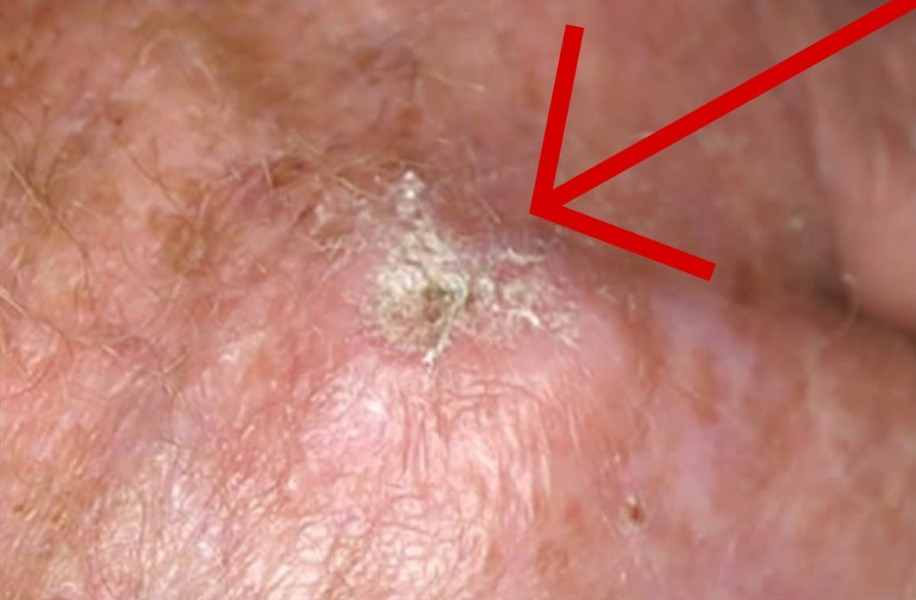
The condition is called Actinic Keratosis, often shortened to AK. It is a skin change caused by years of sun damage, and dermatologists treat it as an important warning sign.
Actinic keratosis usually appears on areas of the body that have received the most sunlight over the years. The face, ears, nose, scalp, neck, forearms, shoulders, and the backs of the hands are among the most common places where these patches develop.
At first glance, they may seem harmless. Some look pink, red, brown, or almost the same color as the skin. Others feel like sandpaper when touched. In many cases, people notice the texture long before they pay attention to the appearance.
The most common warning signs include a rough or scaly patch that does not heal, dry skin that keeps coming back, a crusty or thickened area, itching, burning, or a spot that seems to disappear and then return again. These changes may be small, but they should not be ignored.
The main cause is long-term exposure to ultraviolet radiation from the sun. Every sunburn and every unprotected hour outdoors can leave behind tiny amounts of damage. Over many years, that damage can build up and affect how skin cells grow.
People over 40, those with fair skin, light-colored eyes, a history of frequent sunburns, outdoor jobs, heavy sun exposure, tanning bed use, or a weakened immune system may have a higher risk.
The reason doctors take actinic keratosis seriously is that some of these lesions can develop into squamous cell carcinoma, a type of skin cancer. Not every spot becomes dangerous, but it is impossible to know which one might change over time.
That is why dermatologists often recommend checking, treating, and monitoring suspicious patches early. Treatment may include prescription creams, freezing the lesion, chemical peels, laser treatment, light-based therapy, or removal in certain cases.
The good news is that prevention can make a big difference. Daily sunscreen, protective clothing, hats, avoiding tanning beds, and checking your skin regularly are simple habits that may reduce risk.
A tiny rough patch may not look frightening, but sometimes the body gives its earliest warnings in the quietest way. If a scaly spot does not heal, changes, or keeps returning, it is worth having a dermatologist examine it.