

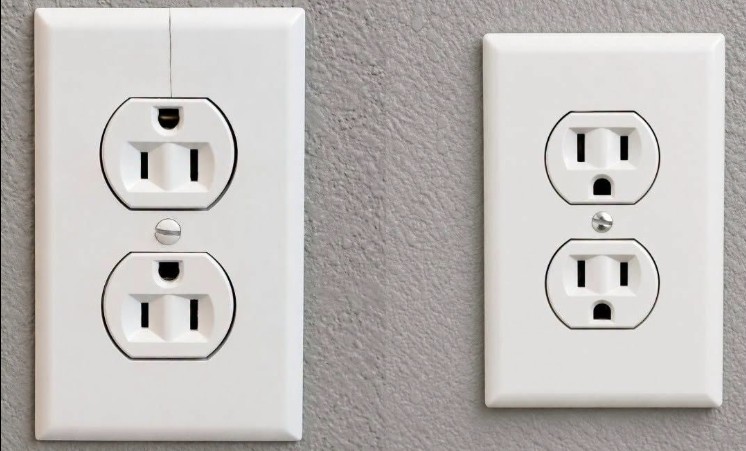
But there is an important detail: an upside down outlet does not always mean this. There is no universal rule requiring electricians to install outlets this way only to mark a switched outlet. In some places, it is simply an electrician’s habit. In others, it may be a local practice. And sometimes someone replaced the outlet and installed it that way without any special meaning. So it is better not to judge only by appearance.
You can check it very easily without touching any wiring: plug a lamp into one half of the outlet and flip the nearest wall switch. If the lamp turns on and off, the mystery is solved. If not, the switch may control another outlet, an outdoor light, or nothing at all anymore.
There is also another reason why some electricians prefer installing outlets with the grounding hole on top. If a plug is slightly pulled out from the wall and a metal object accidentally falls behind it, that object is more likely to touch the ground prong first instead of the live contacts. This is one reason this outlet position is often seen in commercial buildings or medical facilities.
The most important thing is not to rush into turning the outlet around yourself just because it looks “wrong.” If you do not have the proper knowledge or experience, it is better not to open it or touch the wires. And if the outlet feels hot, sparks, buzzes, does not hold the plug properly, or shows burn marks, that is no longer just an interesting household mystery — it is a reason to call an electrician.
So the next time you see an “upside down” outlet, do not immediately assume it was installed by mistake. It may be a small hidden sign that has been right in front of you for years.