

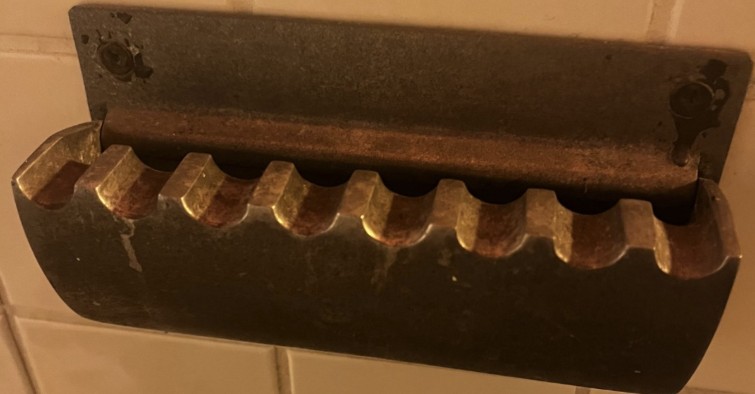
The answer is surprisingly simple: it is an old wall-mounted ashtray, a leftover from an era when indoor smoking was common in bars and many other public spaces. What looks like an odd piece of forgotten hardware today was once an entirely practical fixture.
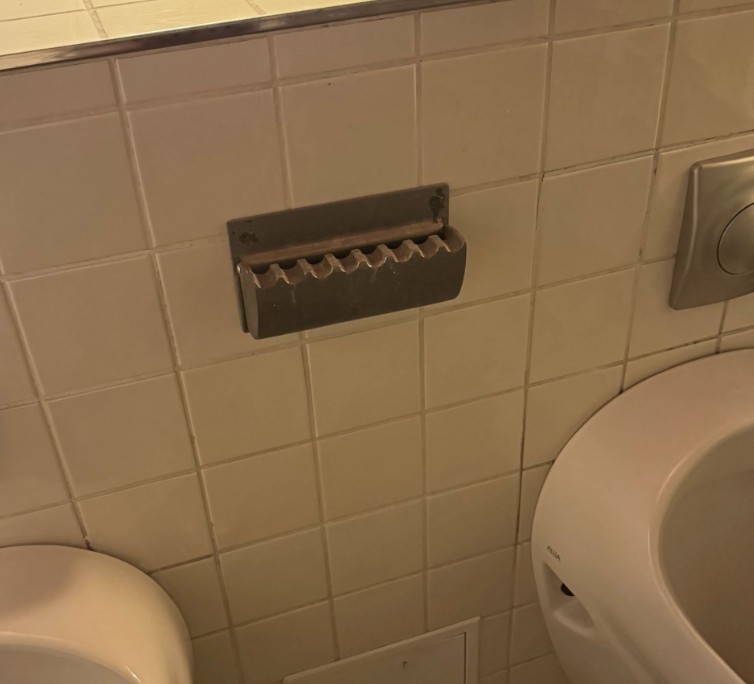
Decades ago, objects like this could be found in places where seeing one now would seem unusual. Restaurants placed ashtrays on tables, while similar fixtures appeared in hallways, stations and other shared spaces. Bars were especially associated with them, and installing one directly on a wall meant it stayed conveniently in place.
Its peculiar design also had a practical explanation. The ridged section allowed a cigarette to rest against the fixture, while the recessed area collected ash and discarded ends. Some versions could even be opened or tilted so they could be emptied and cleaned.
That helps explain why surviving examples often look so battered. They were functional objects, not decorations, and years of constant use left scratches, stains, chipped surfaces and rust. The example described in Berlin was already heavily aged and appeared to have been unused for decades.
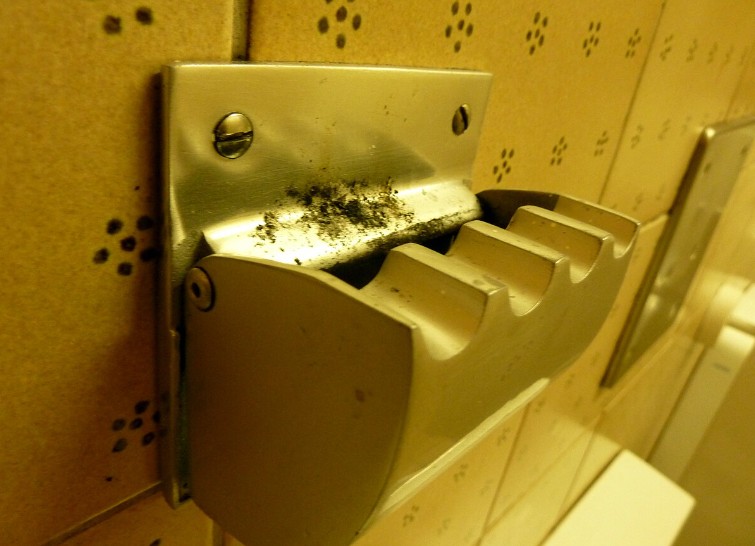
Yet removing such a fixture was not always worth the trouble. Once attached firmly to tile, concrete or another wall surface, it could simply remain there long after its original purpose disappeared. In some older establishments, keeping it may also have become part of the atmosphere.
That is what makes objects like this fascinating today. They were once so ordinary that almost nobody would have stopped to examine them. As habits and public spaces changed, however, their original function gradually became unfamiliar to younger generations.
Now a small metal fixture in an old bathroom can feel almost like an archaeological discovery. It quietly reveals how dramatically everyday environments can change within just a few decades.
The Berlin find is therefore more than a strange object attached to a wall. It is a tiny piece of social history — something designed for an everyday habit of another era, left behind after the world around it moved on.
Sometimes the most interesting reminders of the past are not displayed behind museum glass. They are still attached to walls, overlooked for years, waiting for someone to finally ask: “What is this thing?”