

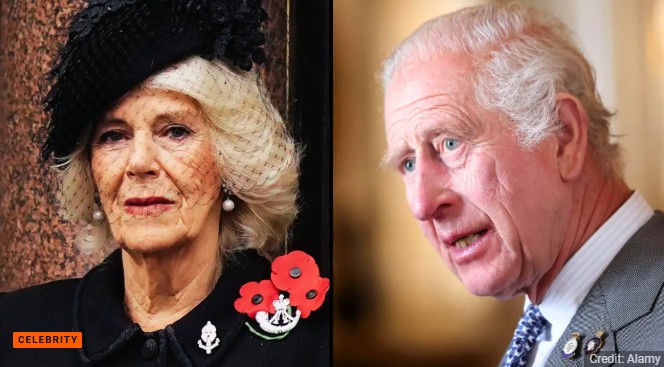
Now, more than two years later, Queen Camilla has made a devastating confession.
The King who refused to stop
King Charles III was diagnosed with cancer in early 2024, the precise nature of which has never been publicly disclosed.
The announcement came on February 5 of that year, confirming that he would step back from public duties while undergoing treatment. What was equally striking was what came next: he did not step back for long.
From the earliest stages of his treatment, Charles demonstrated what those around him describe as a characteristically determined approach to his situation.
He attended public engagements, met with world leaders, carried out investitures, and continued performing the constitutional duties of his role throughout his treatment.
His appearance in Washington just weeks ago for the landmark state visit, in which he addressed Congress, attended a White House state dinner, and navigated four days of intensive diplomatic activity, was the most visible demonstration yet of a man who has simply refused to let illness define his schedule.
Those closest to him say this is entirely consistent with his character. Camilla has spoken about his approach in terms that reflect both admiration and, one suspects, a certain amount of quietly resigned familiarity with a husband who is constitutionally incapable of slowing down.
“Nothing stopped him,” she said in a newly released video produced to mark the 30th anniversary of Maggie’s, the cancer support charity of which she is president, per the BBC. “He just said, ‘This is my way. I’m going to cope with it.’”
He is still receiving treatment. The specific nature of that treatment, like the specific nature of the cancer itself, has not been made public.
What Maggie’s means to the Queen
Camilla has been president of Maggie’s for many years, and her commitment to the charity predates the personal dimension that the King’s diagnosis has since brought to it.
Maggie’s was founded in 1996 by Maggie Keswick Jencks, a writer and garden designer who was diagnosed with terminal breast cancer in 1993 and channelled her experience into creating a new kind of cancer support: not clinical, not institutional, but warm and human, built in the grounds of major NHS hospitals and designed to feel like a home rather than a waiting room.
There are now 27 centres across the UK, supporting hundreds of thousands of people every year.
The charity’s model is grounded in a simple but radical insight: that cancer does not only affect the person who has it. It moves through families, friendships, and relationships, reshaping everything in its path.
The centres exist as much for those who love someone with cancer as for those who have it, spaces where fear and grief and exhaustion can be acknowledged rather than suppressed.
It is a philosophy that, as Camilla’s new interview makes clear, has taken on a profoundly personal resonance for the Queen herself.
The visit she could never forget
In January 2024, just days before the King’s diagnosis was made public, Camilla attended the opening of a new Maggie’s cancer support centre at the Royal Free Hospital in London.
It was a routine royal engagement, the kind of visit she has made dozens of times as president of the charity, meeting patients and families and hearing about the difference the spaces make to people navigating one of the most frightening experiences of their lives.
But this visit was different. She had just learned of her husband’s diagnosis. She knew that treatment was coming. A
nd she had been told, as is standard protocol in such matters, that the announcement had not yet been made public, which meant that she, like everyone else in the royal household who knew, was not permitted to say a word.
What followed was an experience she has carried privately for more than two years. In the seven-minute film recorded at Clarence House to mark Maggie’s anniversary, she described it to Dame Laura Lee, the charity’s chief executive, with an honesty that clearly surprised and moved her interviewer.
She recalled walking into the hospital, meeting people who were going through their own cancer experiences, speaking with their families, and feeling the weight of what she was holding inside.
“I was almost questioning them,” she said. “I didn’t want to pry too deeply. But normally when I went in, I was just talking to them, but I don’t know, I felt it was much more deep. I looked at everybody who was suffering and all the relations and I think it made me realise even more how important these places were.”
And then came the moment she came closest to breaking.
‘I was just longing to let it out’
“Nobody could say anything at the time,” she told Dame Laura. “That was quite difficult. I almost said something but, you know, I felt that it wasn’t the time to say.”
Dame Laura, visibly moved, responded: “It was just a week before it became public and the courage that must have taken for you.”
Camilla’s reply was three sentences that have since been shared widely and stopped many people in their tracks.
“I was just longing to let it out, but obviously I couldn’t.”
It is a feeling that anyone who has ever kept a frightening secret about someone they love will recognise immediately.
The particular loneliness of knowing something that cannot yet be shared. The effort required to hold composure in a room full of people experiencing exactly what you are experiencing, and say nothing.
To listen to someone describe their fear about a loved one’s cancer diagnosis while carrying your own, in silence.
For Camilla, the experience was also quietly transformative.
She described feeling, during that visit, a new depth of connection to the people she was meeting, a sense that she was no longer simply a patron offering support from the outside, but someone sitting alongside them in a shared experience, even if she could not say so.
Dame Laura reflected on the significance of what the Queen had shared.
“The King’s openness about his diagnosis has undoubtedly helped others to be more open themselves,” she said, noting that the public announcement in February 2024 had prompted a twelve percent increase in men contacting Maggie’s with a cancer diagnosis.
“And to now hear the Queen’s completely understandable and natural response as a wife shines a light on why it is so important that family and friends also get the support they need.”
It is that last part that carries particular weight. Cancer conversations in public life tend to focus, understandably, on the person who is ill. Camilla’s interview shifts the lens, gently but deliberately, toward the people who love them.
“To hear her speak so powerfully of her own emotions when visiting the Royal Free centre, while knowing about his Majesty’s diagnosis, is a huge honour,” Dame Laura said.