
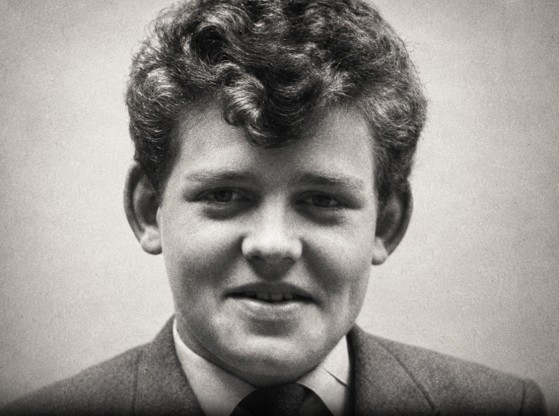
He was born in a place where the air had the color of ash, and mornings began not with sunlight, but with smoke rising above the rooftops. In that city, children grew up quickly — or disappeared into the grayness forever.
He had no glamorous beginning, no wealthy parents, and no beautiful legend behind him. All he had was a voice — rough, strange, as if life had broken it before life had even truly had the chance to hit him.
By day, he worked like an ordinary boy from a working-class district. At night, he stepped onto small stages where hardly anyone listened. But he sang as if everything depended on it.
That boy was Joe Cocker — the future legend the world would come to recognize not by a perfect appearance or polished manner, but by a voice that sounded as though an entire lifetime lived inside every note.
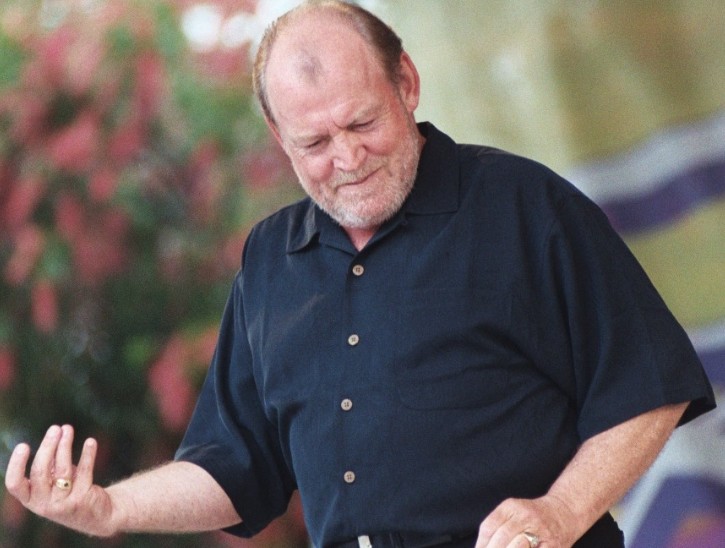
He grew up in Sheffield, an industrial city in northern England, where smoke, soot, and hard work were part of everyday life. His father had served in the Royal Air Force, his mother was a homemaker, and from an early age Joe seemed to feel that staying there forever would mean losing himself.
After school, he became an apprentice gas fitter. It looked as though his fate had already been written: work, routine, retirement, an old watch as a gift, and memories of dreams that never became a life. But music would not let him go. He sang in bars, spent money on demo recordings, and received rejection after rejection.
His first chance did not bring him fame either. A recorded cover of a Beatles song failed, and the label quickly dropped him. But Joe did not disappear. A few years later, it was “With a Little Help from My Friends” that made his voice known far beyond England.
Then came Woodstock. His performance in 1969 became the moment after which people began speaking of him as a phenomenon. He did not simply sing — he seemed to live every sound through his body, his face, his nerves. There was something awkward, wild, and real about it — and that is exactly what made it unforgettable.
But behind the stage, another battle began. Touring, exhaustion, alcohol, addiction, and chaos slowly started to destroy him. There were breakdowns, arrests, ruined performances, and years when it seemed as though that voice might fall silent forever.
But Joe Cocker endured. Pam Baker entered his life, bringing stability and helping him regain control of himself. Later, he once again filled concert halls, recorded albums, and sang as if every song were a confession rather than just another number in the program.
He passed away in 2014, but his raspy voice still cannot be mistaken for anyone else’s. Because Joe Cocker was not just a singer from a city of smoke. He was proof that even a broken road can lead to immortality — if you walk it with soul.