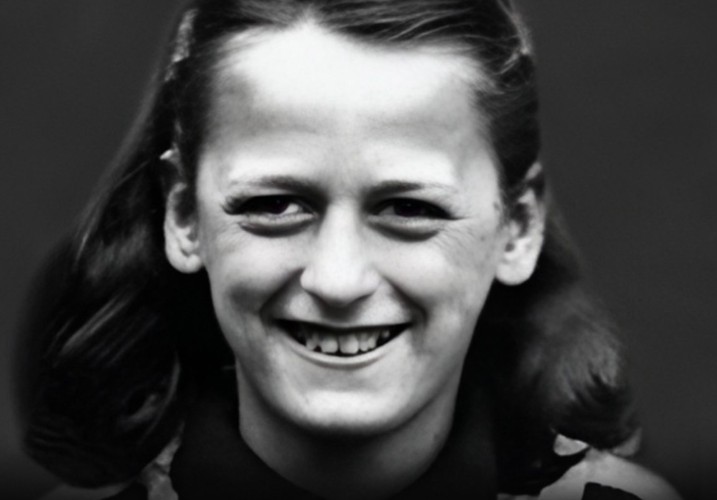
In old photographs, she looks almost touching. Light hair, a slightly shy smile, a neat dress. An ordinary little girl from a working-class neighborhood, one of thousands of postwar children just like her. No one could have imagined that behind those calm eyes there would one day be a coldness that would make an entire nation shudder.
She grew up in a cramped house where arguments were more common than silence. Her father returned from the war a different man — depressed, angry, dependent on alcohol. Her mother endured humiliation, and the children learned to survive. The girl slept in a single bed right beside her parents’, hearing every shout and every blow. And when the violence became unbearable, she was sent to live with her grandmother — as if that could erase what she had seen.
As the years passed, she learned to fight back. Her father, a former boxer, taught her not to cry but to hit in return. At eight years old, she claimed her first “victory” in a fight. As a teenager, she seemed ordinary: she went dancing, worked as a clerk, accepted suitors. But those who knew her remembered something unsettling — she never knew moderation. If she held on, it was until it hurt. If she loved, it was blindly.
Everything changed when a man with dangerous ideas and an obsession with the “perfect crime” entered her life. Their connection was instant, almost fatal. Together, they began planning acts that would later be described as some of the most horrifying crimes in British history. That was when the world learned the name of the little girl from the photographs — Myra Hindley.
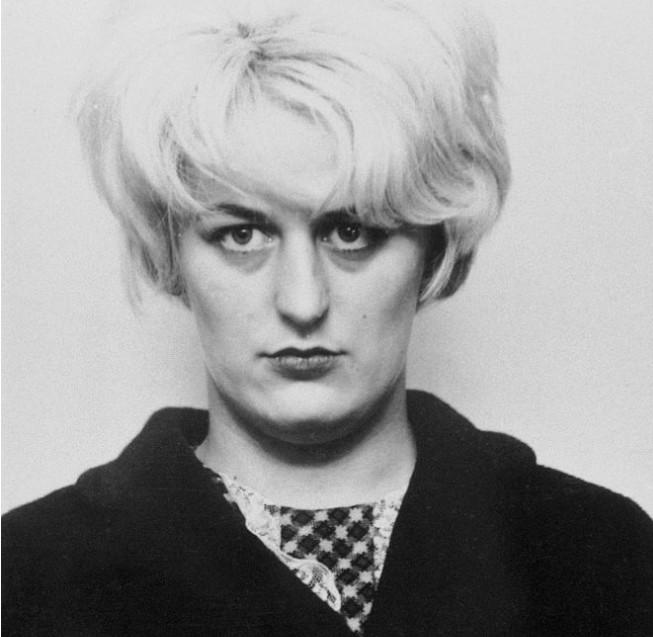
Alongside Ian Brady, she became responsible for a series of child murders that shook the nation in the 1960s. They became known as the “Moors Murderers,” their crimes on the desolate moorlands turning into a national trauma. Her photograph — the bleached-blonde hair, the vacant stare — became a symbol of female evil, and the press labeled her “the most evil woman in Britain.”
She spent the rest of her life behind bars, filing appeals and insisting she had changed. But for many, her image remains frozen in that haunting transformation — from childhood innocence to the abyss she chose to step into. And perhaps it is that transformation that still terrifies more than the crimes themselves.