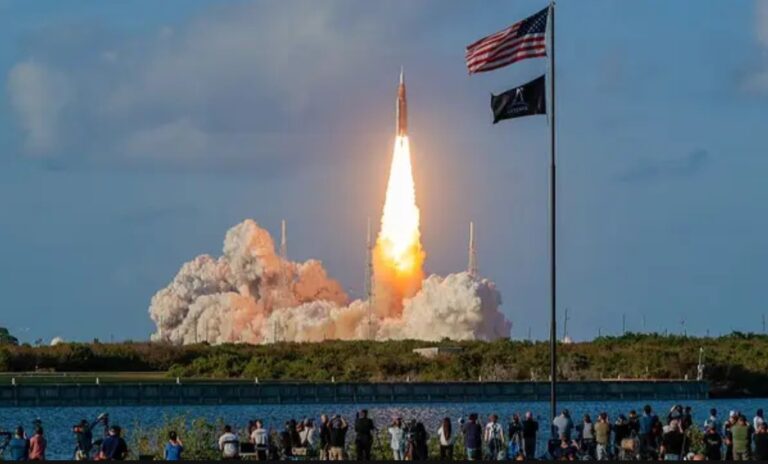
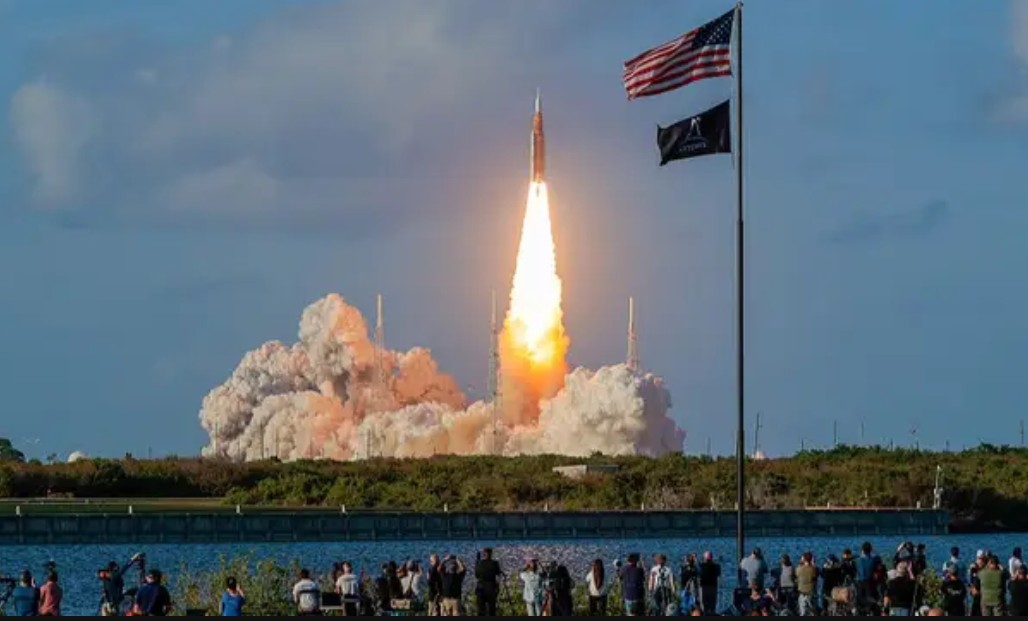
Artemis II successfully took off on Wednesday evening (1 April), with the crew now bound for the Moon – but it looks like they’ve already hit a bit of a technical hitch.
Unfortunately, the crew won’t be setting foot on Earth’s only natural satellite, as they will instead set off on a 10-day mission around the Moon.
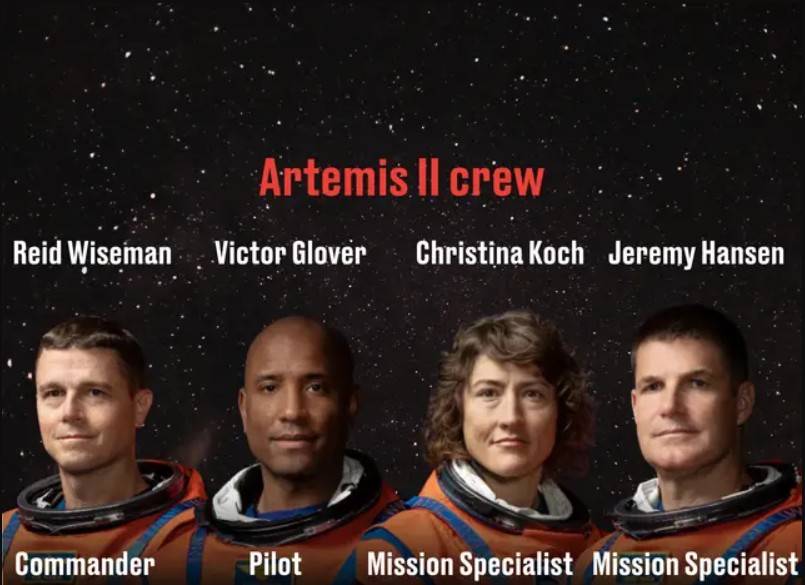
It could take the four astronauts on humanity’s furthest ever journey into space, as NASA’s Reid Wiseman, Victor Glover and Christina Koch are joined with Jeremy Hansen of the Canadian Space Agency to make up the Artemis crew on board the Orion craft.
The mission aims to secure the best view of the moon’s dark side that’s ever been recorded, if all goes to plan.
Four RS-25 engines and twin solid rocket boosters ignited a flame which helped to thrust the rocket into the Florida sky, as NASA’s Space Launch System (SLS) arced out over the Atlantic Ocean into the atmosphere.
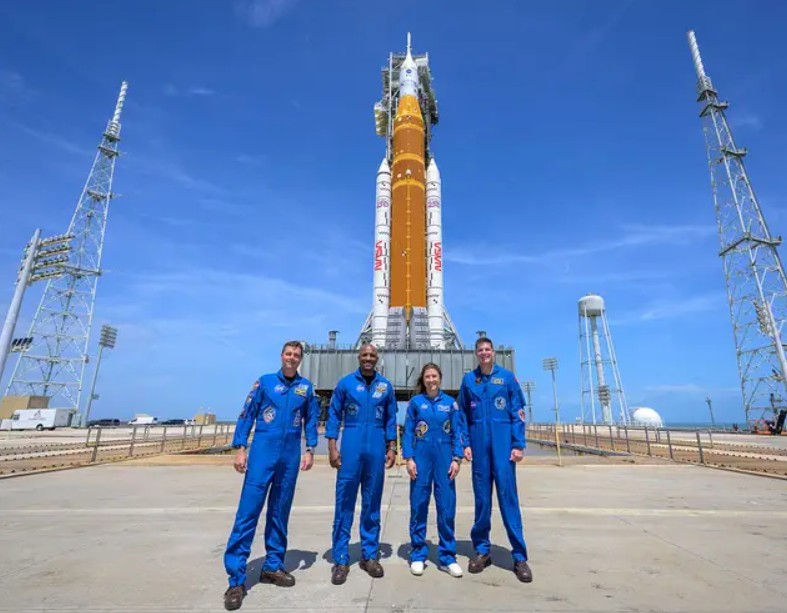
A potential lightning cloud issue was highlighted before launch, while issues around the Launch Abort System also threatened launch, but it seems like everything has gone to plan, with the capsule now in orbit around our planet.
Shockingly, though, the crew reported another issue just hours after take-off while going through life support system checks on board the spacecraft.
Arguably one of the more crucial aspects of the shuttle, the crew noticed something when they were inspecting the toilet, according to the BBC.
At first, astronauts told mission control: “Toilet is powered, waste tank merged.”
But just minutes later, they said that the toilet’s amber warning light was on, with mission control saying they would need some more time to figure out a solution.
What was wrong with the Artemis 2 crew’s toilet?
Humanity’s historic return to the Moon involved a lot more discussion of bodily functions than anyone had expected.
The issue was with the Universal Waste Management System, which is a fancy name for what NASA uses to collect astronauts’ pee.
They could still go for a number two, but obviously, this was going to be a bit of a problem for a ten-day mission.
NASA spokesperson Gary Jordan said (as per Space.com): “The fecal collection of the toilet, that specific capability, can still be used with the waste management system aboard Orion.”
Thankfully, with the help of Mission Control, Artemis 2 mission specialist Christina Koch managed to fix the issue.
Once the fix was implemented, Mission Control’s Amy Dill told Koch over the radio: “Happy to report that toilet is go for use. We do recommend letting the system get to operating speed before donating fluid, and then letting it run a little bit after donation.”
Which is a very formal way of saying, ‘best to give it five minutes before anyone has a wee’.
Where is Artemis now and what’s next for the crew?
The space agency said that the crew will now take a four-hour nap before being awakened at 7.00am EDT (11.00am BST) today, to ‘prepare for the perigee raise burn’.
This is what will lift the lowest point of the Orion spacecraft’s orbit around Earth, preparing it for ‘later translunar operations’, as the crew will then continue their sleep period at around 9.40am EDT.
At its furthest, the crew will be around 230,000 miles from Earth.
NASA administrator Jared Isaacman said in a press conference after take-off that ‘NASA is back in the business of sending astronauts to the Moon’, noting that the crew is ‘safe, secure and in great spirits’.
Fact check: Why hasn’t man landed on the moon since 1972?
NASA’s 1972 Apollo 17 mission was the last crewed mission to the moon, which saw Commander Gene Cernan and Lunar Module Pilot Harrison Schmitt walk the lunar surface for the final time.
But why hasn’t NASA gone back since then?
The answer is money, according to Royal Museums Greenwich.
It should come as no surprise to learn that going to the Moon is very expensive – originally, John F. Kennedy’s government had estimated a $7 billion cost to travel to the moon, and in the end, it came to around $20 billion.
With the combination of less national support and a shift in focus on missions, previous NASA administrator Jim Bridenstine described how the future of lunar travel is about a sustained presence on the Moon, saying: “This time when we go to the Moon we’re going to stay. That’s what we’re looking to do.”