

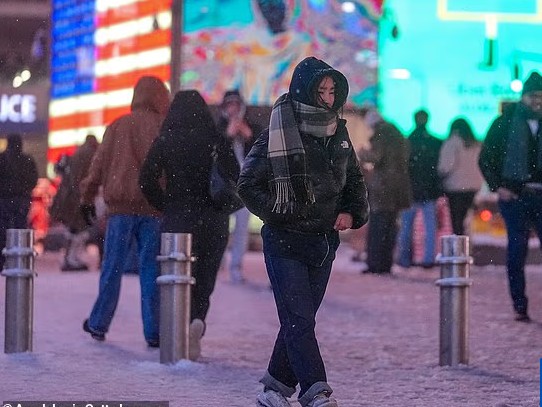
With such arctic conditions, there is a risk of an influx of people going to emergency departments for hypothermia, a dangerous drop in body temperature caused by prolonged exposure to cold. Between 15,000 and 19,000 people visit the ED every year due to hypothermia, while an estimated 700 to 1,500 people die from it.
Dr Alina Mitina, an emergency room physician at Hackensack University Medical Center in New Jersey, told the Daily Mail: ‘In the ER, we see many cases of hypothermia and frostbite that were entirely preventable. We frequently treat individuals who went out for “just a few minutes” without proper gear.
‘This includes people walking their dog, going for a short walk or having their car break down. They are often dressed for a quick trip, not for prolonged exposure and are caught off guard.’
In 20-degree air, initial shivering and numb fingers can begin within 10 to 15 minutes, but sweating or getting wet drastically accelerates the danger, as water pulls heat from the body 25 times faster than air.
Under those conditions, severe hypothermia can set in within 30 minutes, quickly progressing to violent shivering, confusion and loss of judgment within an hour.
However, in the most extreme temperatures, even with a jacket, hypothermia can set in within just minutes of exposure.
Mitina added: ‘For a properly dressed and healthy adult, exposure should be limited as much as possible. Taking breaks in a warm place every 20 to 30 minutes is good practice. For vulnerable individuals, or if you are not adequately dressed, you could be in danger in as little as 10 to 15 minutes.’
Beyond causing hypothermia and severe frostbite, frigid temperatures strain the heart and lungs by constricting blood vessels and raising blood pressure. As the body struggles to stay warm, its energy reserves deplete.
Once core temperature drops below 95F (35C), mental functions like judgment and reasoning begin to fail. This risk is especially acute for the elderly, infants and those with pre-existing conditions like COPD or heart disease.
While some people can spend the majority of their day indoors enveloped by heat, others, like delivery drivers, postal workers and even people taking their dogs on a brief walk, are at risk of potentially deadly effects of cold exposure.
Layering is key to protecting against the severe cold.
Mitina said: ‘Your first line of defense is proper clothing. Layer up with several layers of loose-fitting clothing with the inner layer moisture-wicking fabric like wool or silk to draw sweat away from your skin.
‘Avoid cotton, which holds moisture and will make you colder. Wet clothing chills the body very quickly. If you start to sweat or experience shivering, remove a layer of clothing to prevent getting damp.’
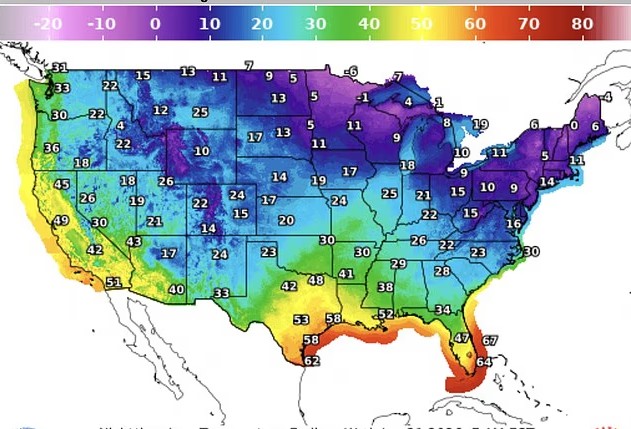
She added: ‘Protect your head with a warm hat, as a significant amount of body heat is lost through your head. For your hands, mittens are typically warmer than gloves. Wear waterproof boots to keep your feet dry and a scarf or mask to cover your face and mouth, which also helps protect your lungs.’
Experts recommend limiting time outside as much as possible and avoiding alcohol. It may provide a warm, fuzzy feeling at first, but alcohol accelerates heat loss.
Finally, listen to the body. Uncontrollable shivering, confusion or numbness are not just discomforts but SOS signals to get inside immediately.