

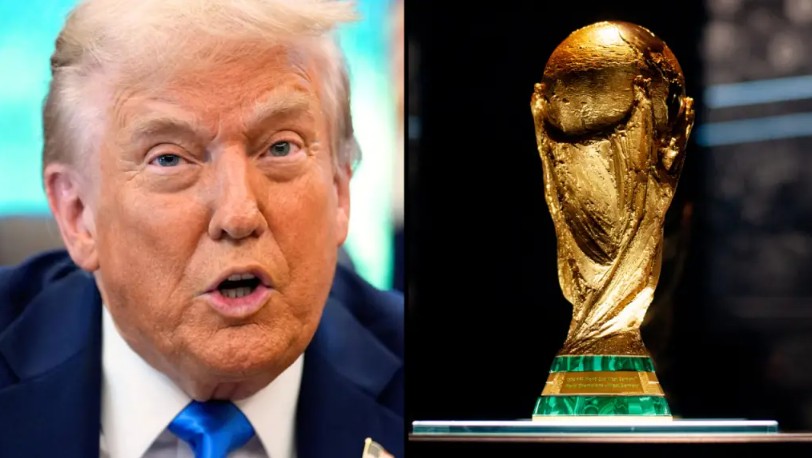
These concerns have only intensified as the political temperature has risen, with many questioning whether the US should be hosting a tournament meant to unite the world through sport.
The current crisis stems from Trump’s determination to acquire Greenland, the world’s largest island currently under Danish control. The president has argued that acquiring Greenland is essential for American national security, citing concerns about Russian and Chinese influence in the region.
He has refused to rule out military force to achieve this goal, claiming that ownership of the territory is ‘psychologically important’ for the United States.
England’s response to Greenland crisis
England’s response to the Greenland situation has been firm and unequivocal. The United Kingdom joined seven other European nations in issuing a joint statement expressing solidarity with Denmark and the people of Greenland, LBC reports.
The statement emphasized the principles of sovereignty and territorial integrity, directly challenging Trump’s ambitions.
Foreign Secretary Yvette Cooper defended this approach in Parliament, noting that engagement with the Trump administration had already yielded positive results on other issues, including substantial reductions in initially proposed tariffs and progress on Ukraine security guarantees.
England, one of football’s most storied nations and a genuine contender for the trophy under manager Thomas Tuchel, now finds itself caught in a geopolitical storm that has nothing to do with what happens on the pitch.
The Three Lions are scheduled to play all three of their group stage matches on American soil, facing Croatia on June 17 in what should be a marquee fixture. Instead, the buildup has been overshadowed by threats of tariffs and calls for boycotts.
Trump’s tariff threats target Europe
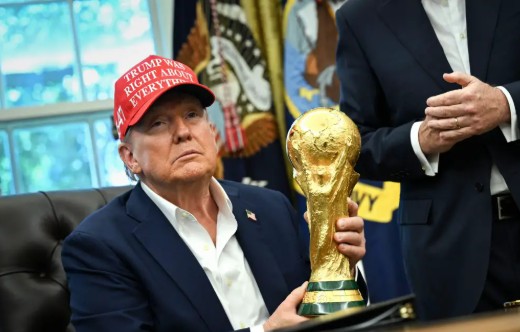
However, Trump did not take kindly to this opposition. In a lengthy statement on his Truth Social platform, the president announced that starting February 1, 2026, the United Kingdom along with Denmark, Norway, Sweden, France, Germany, the Netherlands, and Finland would face a 10% tariff on all goods sent to the United States.
More significantly for the World Cup, he declared that this tariff would increase to 25% on June 1, just days before the tournament begins.
Trump justified these measures by claiming that these nations have ‘journeyed to Greenland, for purposes unknown,’ characterizing their engagement as ‘a very dangerous situation for the Safety, Security, and Survival of our Planet.’
He insisted that the tariffs would remain in place ‘until such time as a Deal is reached for the Complete and Total purchase of Greenland.’
The situation has prompted dramatic responses from British politicians. Conservative MP Simon Hoare and Liberal Democrat Luke Taylor have both called for England, Scotland, and any other qualifying Home Nations to boycott the World Cup entirely.
Hoare argued that traditional diplomatic channels are ineffective with Trump, stating: “We need to try and work out what makes this man tick. He is thin-skinned, he has an ego, and he doesn’t like to be embarrassed.”
He suggested that a World Cup boycott, along with canceling King Charles’s planned April state visit, would be ways to ‘fight fire with fire.’
Scotland, qualifying for their first World Cup in nearly three decades, faces an agonizing decision.
Their opening match is scheduled for June 14, and the prospect of withdrawing after such a long absence would be devastating for Scottish football fans who have waited a generation for this moment.
The controversy has also raised serious questions about FIFA’s judgment in awarding Trump their inaugural Peace Prize in December.
The organization has doubled down on its support for the president despite his recent threats of military action against multiple nations.
A FIFA spokesperson defended the award, citing Trump’s ‘exceptional actions for peace and unity’ and emphasizing the organization’s ‘strong relations’ with the president.
As the World Cup approaches, the beautiful game finds itself entangled in an ugly political dispute with no clear resolution in sight.