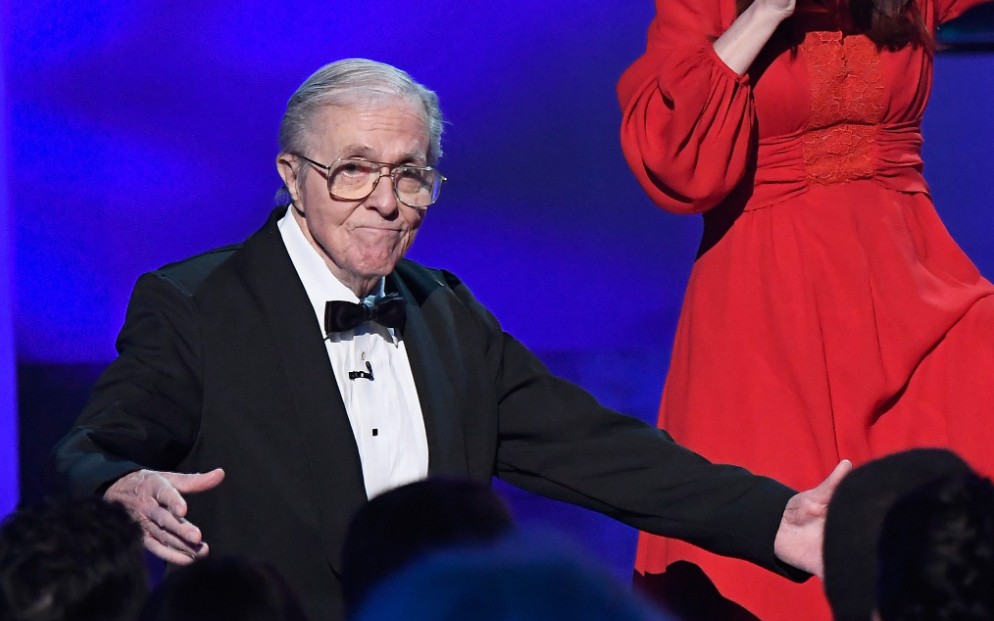
For decades, he quietly existed in the background of some of television’s most beloved moments. Viewers may not have always known his name, but they recognized his presence instantly — a familiar figure who felt like part of the family. His performances never screamed for attention, yet they anchored scenes with warmth, timing, and authenticity that only a true professional could deliver.
He was the kind of actor casting directors trusted implicitly. When a scene needed credibility, calm authority, or a touch of humanity, he was the one they called. Across generations of television audiences, his face appeared again and again — sometimes for a moment, sometimes for years — always leaving an impression that lingered long after the credits rolled.
Perhaps his most memorable role placed him in a setting audiences returned to week after week: a place of laughter, confessions, and sharp dialogue. Standing behind a bar, he watched iconic characters come and go, becoming a silent witness to television history. The show itself went on to define an era, earning massive acclaim, cultural relevance, and dozens of awards, while he remained a steady, comforting constant.
That actor was Charles C. Stevenson Jr., best known for playing the bartender Smitty on Will & Grace. He appeared in 12 episodes across seven seasons, from 2002 to 2020, becoming one of the show’s most recognizable recurring faces. His final appearance came during the series’ eleventh season, marking the quiet end of a remarkable career.
Beyond Will & Grace, Stevenson built an extensive résumé spanning decades. His film work included appearances in The Naked Gun, Ed Wood, Men in Black, Pleasantville, and Ghost World. On television, he appeared in classics such as Cheers, Murder, She Wrote, Everybody Loves Raymond, The Office, and Curb Your Enthusiasm.
Charles C. Stevenson Jr. passed away from natural causes on January 19 in Camarillo, California. He was remembered by his family as a man who embraced his craft with humor and humility, once joking that his job often amounted to “marrying or burying people.” He leaves behind five children, eight grandchildren, and six great-grandchildren — and a legacy quietly woven into the fabric of television history.