

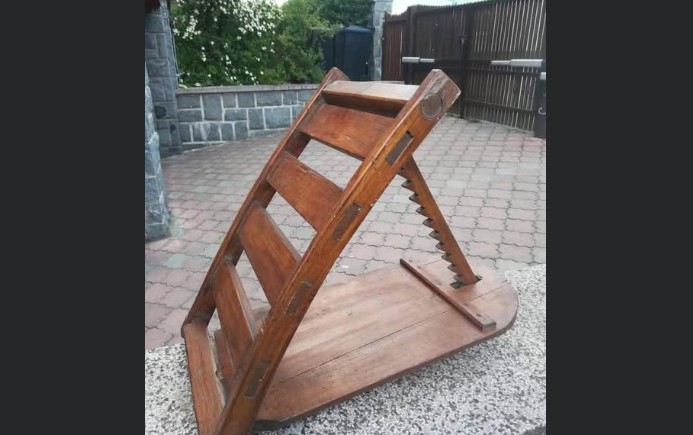
This mysterious wooden object is an old cheese press — a traditional tool once used to squeeze liquid from curds and help form homemade cheese.
Long before modern kitchen equipment, families often made cheese at home. Fresh curds were placed inside cloth or a wooden mold, then pressed firmly so the extra whey could drain away. The more evenly the pressure was applied, the better the texture and shape of the finished cheese became.
That is why the object looks so unusual. It was not built for beauty, but for force. The heavy wooden frame held everything steady, while the adjustable parts allowed the maker to increase or control the pressure. In many homes, this simple device was used again and again, especially in rural households where milk, butter, and cheese were part of everyday life.
The marks on the wood tell their own story. Dark stains, softened corners, and rubbed surfaces are exactly what you would expect from years of contact with damp cloth, fresh curds, and busy hands. It may look mysterious now, but at one time it was a practical and familiar household helper.
Objects like this were often homemade or crafted by local carpenters. No two were always exactly alike. Some were large and heavy for serious farm use, while others were smaller, made for a family kitchen. Their design depended on the space, the amount of milk available, and the habits of the people who used them.
What makes this find so fascinating is how quickly ordinary tools can become puzzles. A century ago, almost anyone in a farming household might have recognized it. Today, without the smell of milk warming on the stove or cloth-wrapped curds waiting to be pressed, its purpose is no longer obvious.
So the strange wooden frame found in the old house was not a broken chair, not a lectern, and not a decorative stand. It was a quiet piece of domestic history — a cheese press, built for patience, pressure, and the slow transformation of milk into food.