

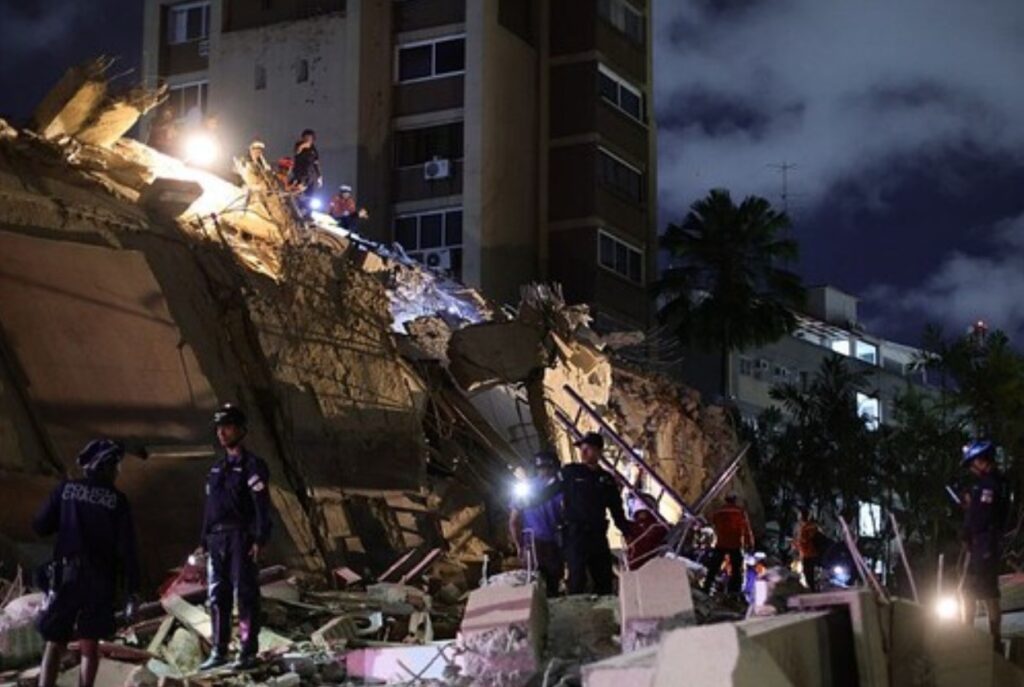
Powerful earthquakes struck Venezuela on the evening of June 24. First, a magnitude 7.2 quake was recorded near San Felipe. Less than a minute later, the country was hit by a second shock — magnitude 7.5. Its epicenter was about 23 kilometers from Yumare.
The biggest concern was that the quake occurred near the coast. Because of this, a possible tsunami threat warning was issued for part of the Caribbean region. People were urged to move away from the water, avoid returning to damaged buildings, and wait for official updates.
In Caracas, the tremors were felt especially strongly. Buildings were damaged in some areas, dust rose through the streets, and people ran out of apartments and gathered outdoors. Information came in fragments, which only increased the fear.
The U.S. Geological Survey issued a red alert level. This means the consequences may be severe: serious destruction, major damage, and a significant number of possible casualties. Venezuelan authorities declared a state of emergency. Casualties have been reported, but the exact numbers are still being clarified.
Almost at the same time, a magnitude 6.9 earthquake struck northern Japan. Its epicenter was off the coast of Iwate Prefecture at a depth of about 50 kilometers. The tremors were felt even in Tokyo.
Rescue teams are working in emergency mode. The main priority now is to inspect damaged buildings, help people in dangerous areas, and prevent panic caused by aftershocks. Residents are advised to keep documents and water close and follow official warnings.
That night became a reminder: danger does not always end after the first tremor. Sometimes the hardest minutes begin exactly when the ground seems to have finally stopped shaking.