

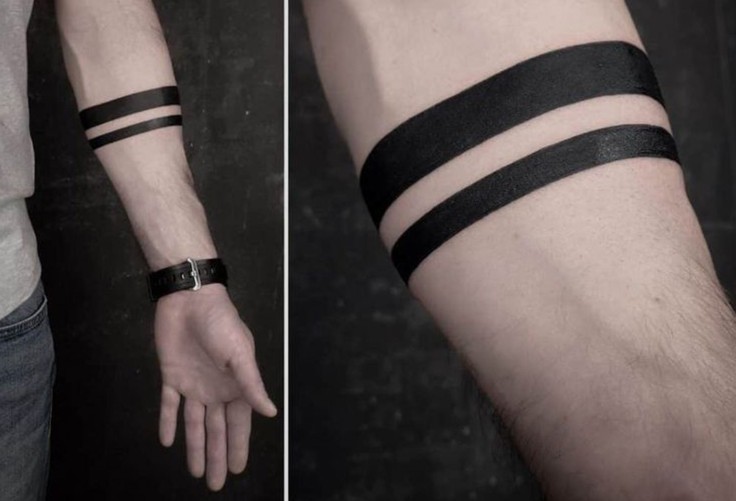
Today, these ancestral symbols are being reborn through the lens of Western minimalism. Since the 2010s, there has been a strong resurgence of understated, refined tattoos that convey personal meaning rather than flashy aesthetics. Specialized tattoo artists even speak of a “renaissance of conceptual tattooing,” often abstract, which invites interpretation rather than demonstration.
Black bands: the most common meanings
A black band can reflect pain or strength. It sometimes resembles a mourning armband: a silent tribute to a departed loved one. Others see it as a symbol of resilience, a way to mark the skin after an ordeal, like sealing a scar with ink.
Some choose to get several stripes tattooed, each representing a key moment: a birth, a breakup, a pivotal trip. Others use them to express their loyalty to a value, a commitment, a cause that resonates with them. And then there are those who share this experience with two or three people, siblings, or close friends.
But perhaps the most beautiful thing about all this is that this symbol can remain completely private. A unique interpretation, known only to oneself, like a closely guarded secret.