

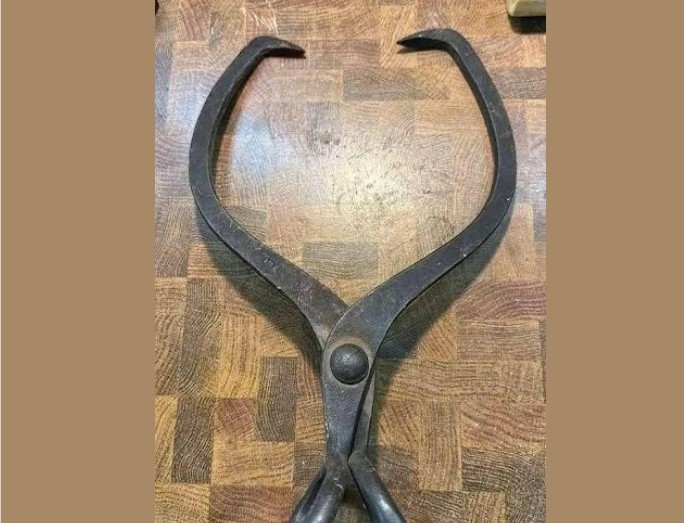
The answer is surprisingly simple: this is a pair of antique ice block tongs, also known as ice lifters. Before electric refrigerators became common, large blocks of ice were cut from frozen lakes, stored in icehouses, and delivered to homes, shops, and businesses. These tongs were the tool that made that difficult job possible.
The curved metal arms and pointed hooks were not random at all. They were designed to grip slippery blocks of ice firmly without requiring a worker to wrap their hands around the frozen surface. When the handles were opened, the hooked ends spread apart. Once placed on both sides of an ice block, squeezing or lifting the handles caused the points to bite slightly into the ice, creating a secure hold.
This mattered more than it may seem today. A single block of ice could be large, heavy, wet, and dangerous to carry by hand. Without the right tool, it could slip, fall, break, or injure someone. Ice tongs gave workers control, balance, and leverage, allowing them to move frozen blocks from wagons, storage rooms, and delivery carts into homes.
For many families, ice delivery was once part of ordinary life. Before modern refrigeration, people relied on insulated iceboxes to keep milk, meat, butter, and other foods from spoiling. The iceman’s arrival was not unusual—it was as normal as a package delivery is today. Tools like this helped support an entire system that most people now barely remember.
Most of these tongs were made from strong forged iron because they had to survive cold, moisture, and constant use. The rust, scratches, and darkened patina found on surviving examples are not just signs of age. They are evidence of years of labor, weather, and daily necessity.
What makes this object fascinating is not only what it did, but what it represents. Today, ice appears instantly from a freezer or a machine. But not so long ago, staying cool and preserving food required harvesting ice, storing it, transporting it, and carrying it by hand.
So this strange-looking tool is more than a curiosity. It is a small reminder of a world where simple engineering solved everyday problems—and where something as ordinary as keeping food cold depended on strength, timing, and a pair of iron hooks.