

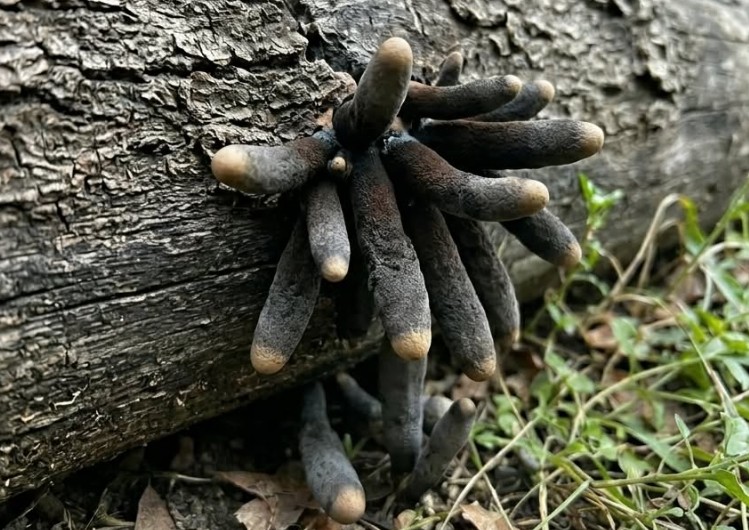
The answer is less terrifying than the appearance. This fungus is commonly known as Dead Man’s Fingers, and its scientific name is Xylaria polymorpha. It usually grows on dead hardwood, especially around old stumps, buried roots, or decaying logs. Despite the creepy look, it is part of the natural recycling system of the forest and garden. (Homemaking.com)
It does not attack people, and it is not there because something awful is buried underneath. It feeds on dead organic material, helping break down tough wood and return nutrients to the soil. In other words, while it looks disturbing, it is actually doing useful work.
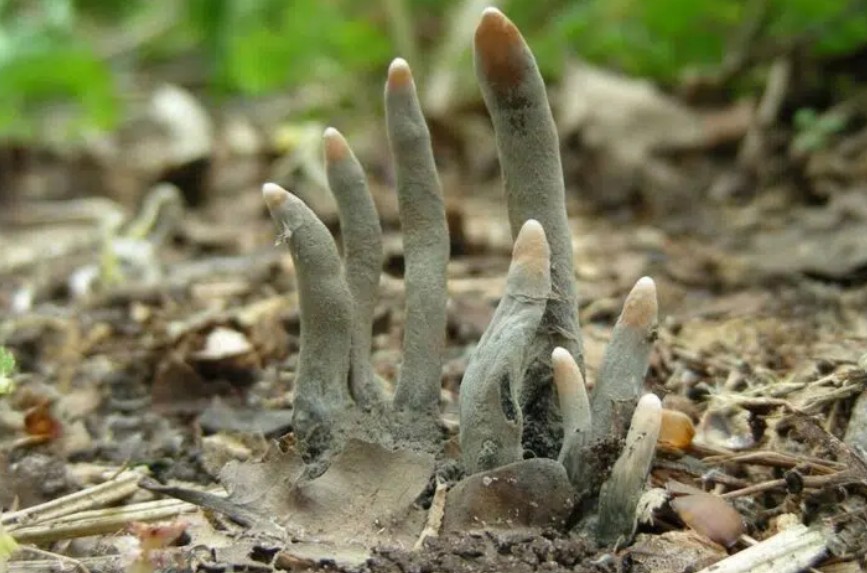
So, is it safe to touch? Generally, yes — it is not known for causing harm just from being handled. Still, it is a wild fungus, so the smart rule is simple: do not eat it, do not rub your eyes after touching it, and wash your hands afterward. It may not be dangerous, but it is definitely not food. (Homemaking.com)
Dead Man’s Fingers can change appearance as it ages. Younger growths may look lighter and softer, while older ones become darker, harder, and more finger-like. The pale ends can make them look even more realistic, which explains why so many people mistake them for something much more alarming.
You are most likely to notice them in damp, shady places, especially from late summer into autumn, though dried specimens can remain visible for a long time. If you find them in your yard, there is usually no reason to panic. They are a sign that old wood is decomposing nearby.
So the next time you spot these strange black “fingers” growing from a log, take a photo — but don’t be fooled by the spooky disguise. Nature has a strange sense of design, and sometimes one of its most unsettling creations is simply a hardworking fungus.