

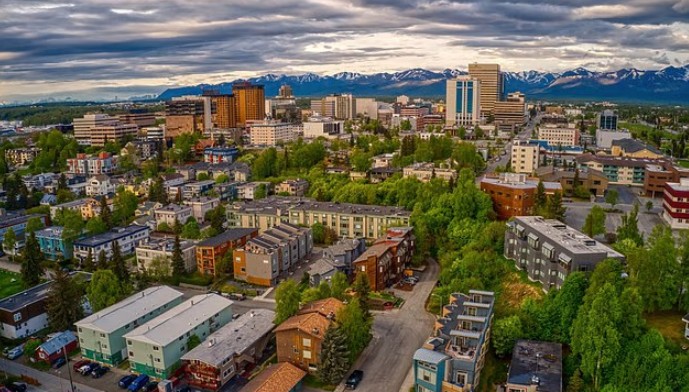
And only by the fourth paragraph did officials confirm: the earthquake struck one of the largest cities in the United States — Anchorage, Alaska.
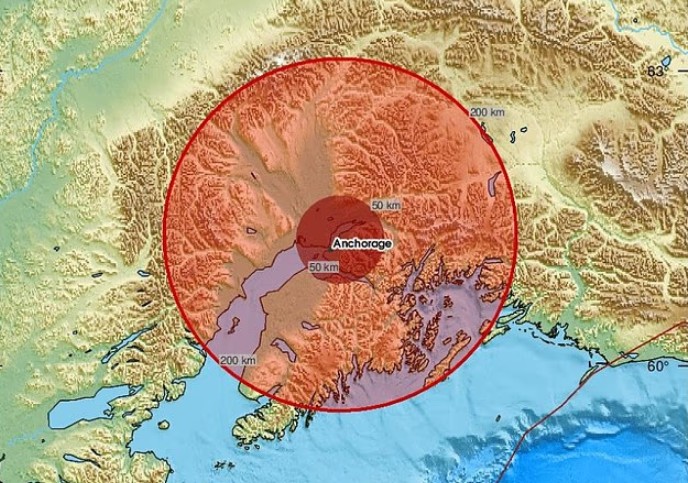
The first major tremor was recorded at 8:11 a.m. local time, with the epicenter in the Susitna region, roughly 30 miles from the city of more than 300,000 residents. Shaking was reported across the entire South-Central region, with light tremors felt even hundreds of miles to the south.
There were no immediate reports of major damage or injuries. Local authorities are currently assessing infrastructure, while emergency crews conduct inspections of critical facilities. No tsunami threat has been issued, according to the National Tsunami Warning Center.
Residents are actively sharing their experiences online. One user on X wrote: “That was a solid shake.” Others described the event as “a couple dozen jolts all at once.”
Less than an hour after the main quake, a smaller 3.3-magnitude aftershock was recorded in the same area.
Seismologists warn that this may not be the end. According to the USGS, there is a 77% probability of another 4.0-plus tremor in the coming week, and a 6% chance of another 6.0-magnitude quake.
Anchorage reported moderate shaking, while regions farther south reported light waves that were still strong enough to scare residents. The last quake of similar strength in this part of Alaska was in 2021, when a 6.1-magnitude earthquake struck northeast of Anchorage.
The Alaska Earthquake Center confirmed:
“This event was widely felt throughout Southcentral Alaska and as far as Fairbanks.”
The Susitna region sits in one of the most seismically active zones on Earth — the area where the Pacific Plate subducts beneath the North American Plate, gradually building immense underground pressure that eventually releases in powerful seismic events.
The region is also influenced by the Denali Fault system — one of North America’s most dangerous strike-slip faults, capable of transmitting strong shaking over vast distances.
Experts note that the area could continue to experience tremors, as ongoing tectonic compression forms numerous smaller faults, any of which can generate additional quakes.