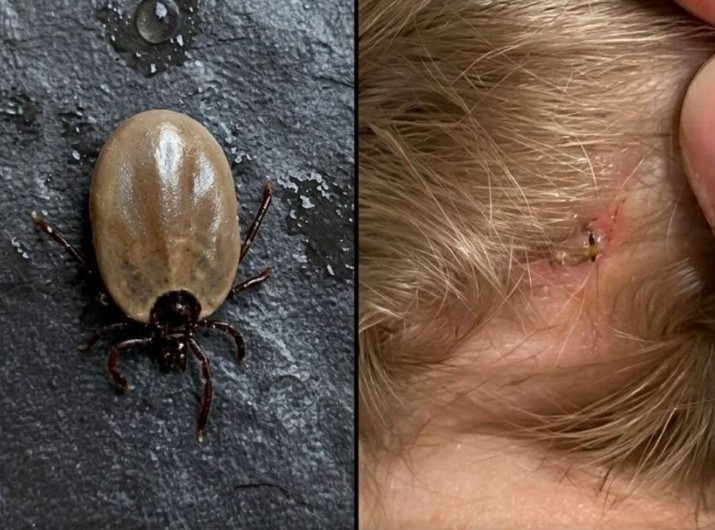
The 2026 tick season in the United States has started earlier and appears more active than usual. According to CDC data, the number of emergency department visits after tick bites has risen in many parts of the country, reaching one of the highest levels for this time of year since 2017. The increase is especially noticeable in the Northeast and the Midwest. In April, tick-related emergency visits were more than 25% higher than last year, and in some regions the rise was even sharper.
Experts say several factors may be driving the trend. Mild winters, a warmer spring, higher humidity, and growing wildlife populations have created favorable conditions for ticks to spread. Because of warmer weather, ticks have become active earlier, and their season may last longer. This means the risk of being bitten is increasing not only in forests and parks, but also in yards, on lawns, near homes, and during ordinary walks.
One of the main concerns is the blacklegged tick, also known as the deer tick, which is common in the eastern United States and around the Great Lakes. It can spread Lyme disease, anaplasmosis, babesiosis, and other infections. In southern and central states, the Lone Star tick is common and has been linked to alpha-gal syndrome, an allergic reaction to red meat and some dairy products. In the western United States, the western blacklegged tick is found, while the American dog tick is common in many states east of the Rocky Mountains and can spread Rocky Mountain spotted fever.
The danger with ticks is that their bite often goes unnoticed. Adult ticks are very small, and young ticks can be as tiny as a poppy seed. Because of this, people often notice a tick only after it has been attached to the skin for a long time. Some illnesses may be transmitted after prolonged attachment, and the first symptoms can appear only days or even weeks later.
The CDC advises people to use registered insect repellents before going outdoors, wear light-colored clothing, treat clothes and gear with permethrin, and stay in the middle of trails when walking in wooded or grassy areas. After returning home, people should check their clothes, body, children, and pets. Special attention should be paid to areas behind the ears, under the arms, behind the knees, along the hairline, around the waist, and between the legs. Clothes should be dried on high heat for at least 10 minutes, and taking a shower within two hours after being outdoors is also recommended.
If a tick has already attached to the skin, it should be removed as quickly as possible with fine-tipped tweezers by pulling straight upward. People should not use alcohol, fire, oil, or other “folk methods,” as they may increase the risk of infection. After removing the tick, the bite area should be washed with soap and water. Medical help should be sought if a rash, fever, joint pain, weakness, swelling, breathing problems, or any other unusual symptoms appear after a tick bite.